Learn Taijiquan, Qigong, & Meditation, and experience Buqi Therapy programmes, with Marc Price in Worcestershire.
Improve your health, fitness, and wellbeing, and enrich your spiritual life.
"Your techniques are very direct and effective and yes it is a jolly class." - Barry S.
"I do appreciate the headspace that the meditation gives me, a sense of clarity and perspective and cleansing." - Paddy S.
"I feel as if my personal bin has been emptied of rubbish!" - Liz H.
"I loved the Workshop" - Peter W.
"Marc is very patient and makes you welcome despite your limitations." - Julie H.
"We find the classes physically and mentally stimulating." - Svetlana Z.
| Date | Event | Details |
|---|---|---|
| {{Date}} | {{Event}} | {{Details}} |
Click the button below for further details!
Click the button below for further details!
Click the button below for further details!
Click the button below for further details!
Click the button below for further details!
Click the button below for further details!
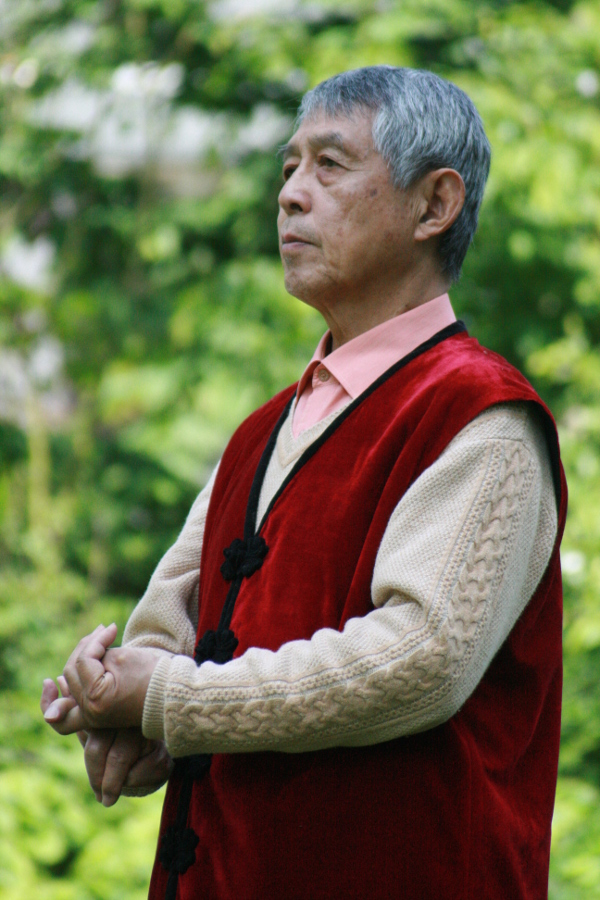
'Tai Chi etc' is Marc Price's Worcestershire-based personal development practice. Marc's aim is to support people on their life journeys, either privately or in public classes. This support works with the physical and subtle bodies, to gently develop fitness, vitality, and a deep connection with the spirit/soul. For those who request it, Marc also works with the spirit, to address any problems, and to initiate and/or support you through your spiritual awakening.
Marc is passionate about research, study, and accurate teaching of the authentic knowledge brought to us by Dr Shen Hongxun. Marc has been studying and training with Dr Shen Hongxun directly, as well as with the top '1st generation' teachers of these systems, since 2001. Marc is a '2nd generation' teacher of the Taiji37 style tai chi, the Taijiwuxigong exercise system, and Wuxi Meditation, and Marc is a fully qualified Buqi Therapy practitioner. Dr Shen asked Marc to begin teaching Taiji37, Taijiwuxigong, and Wuxi Meditation in 2008, and Marc is the only practitioner based in Worcestershire with the authority to teach these systems.
Marc is a Senior Instructor member of the Tai Chi Union of Great Britain.
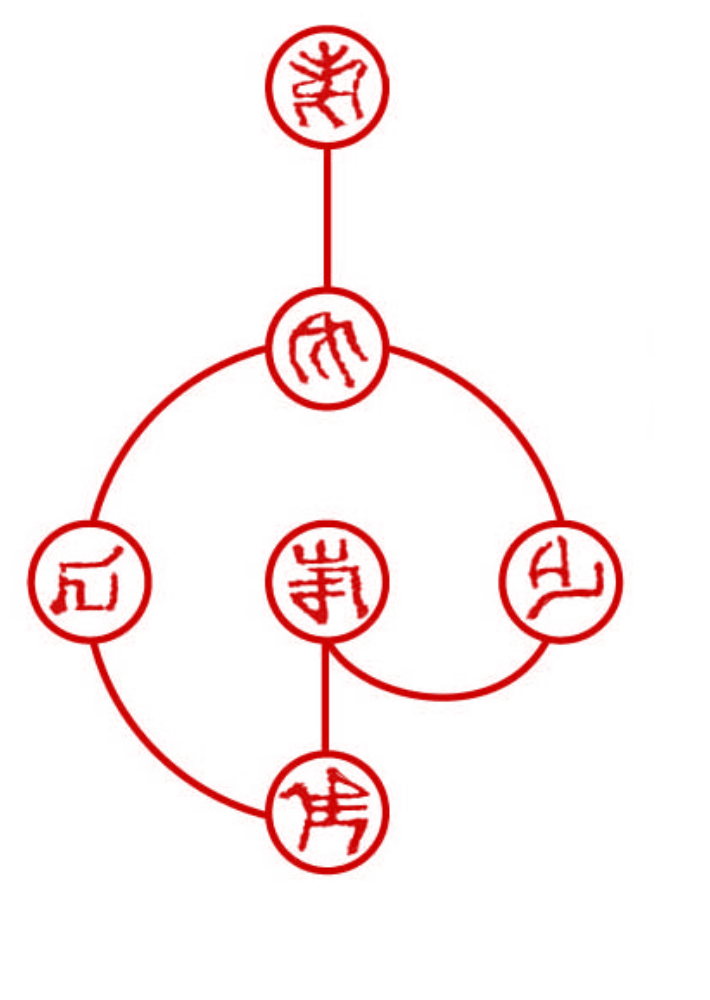
Paul Brewer (1958 - 2021) was Marc's first Taijiquan teacher, who taught Marc a lot of the Buqi System teachings as well as some fundamentals on how to teach from the lineage. Paul introduced Marc to Dr Shen Hongxun in 2002, and Dr Shen became Marc's main teacher soon after this.
Shen Hongxun (1939 - 2011) began studying Taijiquan at the age of 11 with Dr Wu BaoYuan, a family friend. After a few months of hard study/training, Dr Wu introduced Dr Shen to Professor Yue HuanZhi; Dr Shen considers Yue HuanZhi to have been his main teacher. Later, Dr Shen went on to study Taijiquan with other masters such as Tian Zhaoling, and an important master of the Southern school (Nanpai), Xia ZiXin. As well as Taijiquan, Dr Shen also took a deep interest in spiritual matters, after having been introduced to Daoist QuanZhen school meditation practices by his uncle, Shen BaoTai. Dr Shen also studied Buddhist meditation, and he was ordained as Lama FoRe by his root master, Lama Fahai.
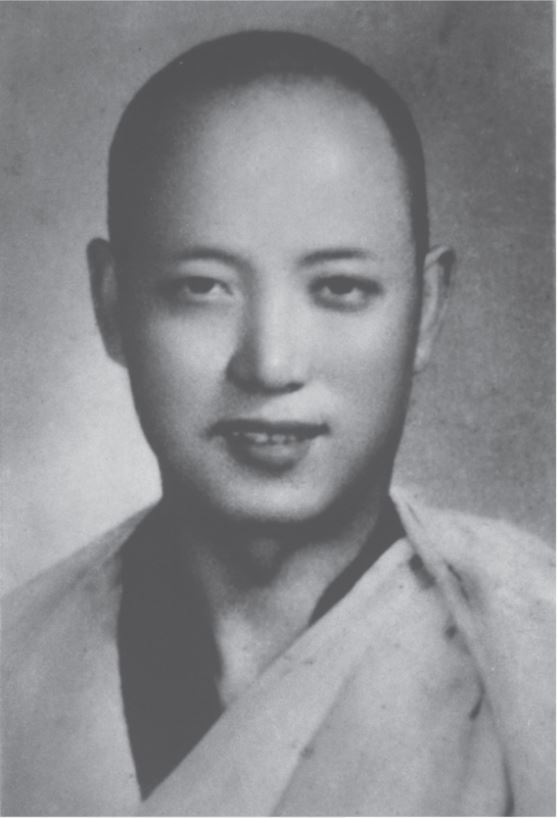
Yue HuanZhi (1899 - 1960) was famous in Shanghai for his mastery of internal martial arts and his skills with taiji forces. Professor Yue's main Taijiquan teacher was Master Dong YingJie (Dong Wenke). During his early years, Professor Yue studied martial arts with a disciple of Chen YanXi, and he later spent some time studying Nanpai Taijiquan in Hangzhou before meeting Dong YingJie. It is believed that Professor Yue perfected his taiji forces skills through his study and practice of Vajrayana Buddhism. His Vajrayana root master was a lady called Chen Guanghuan. Dr Shen's exposure to Professor Yue's enduring kindness and compassion spurred him on to study Chan, Vajrayana, and other schools of Buddhism.
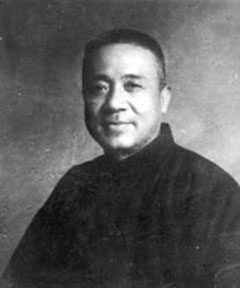
Dong YingJie was a key disciple of master Yang ChengFu, and a famous Taijiquan master in his own right. He became very famous after defeating a British boxer in the ring, after taking the place of his first martial arts teacher, Li BaoYu. There is a lot of information about Master Dong online, which is worth checking out if you are so inclined.
Yang ChengFu is arguably the most famous Taijiquan master of the 20th Century. He was instrumental in promoting the study of Taijiquan within China for its health benefits, and Taijiquan was first taken to the West by one of his main students: Master Cheng ManChing. A lot of information is available in print and online about Master Yang ChengFu.
Chen GuangHuan was an accomplished Vajrayana master, who was more often referred to as Madame Wang or Lama Wang (Wang was her married name). Her root master was the Lama known as Nona Hutuktu (Norlha Tulku). Madame Wang studied extensively with Nona Hutuktu between 1933 and 1936. Although Professor Yue received empowerment from Nona Hutuktu, he became a close disciple of Madame Wang. Madame Wang was an active teacher within the 'Perfect Enlightenment School', which was established under the direction of Nona Hutuktu to disseminate his teachings.
Lama Fahai was a very accomplished master of Chan and Vajrayana (Nyingma and Kagyu) Buddhism, and a highly skilled Acupuncturist. Lama Fahai also spent some time studying and practicing techniques from the QuanZhen (Longmen) school of Daoism. He was Dr Shen's main meditation teacher, and he ordained Dr Shen as a teaching Lama. Lama Fahai's Chan master was HuiDing and his Vajrayana master was Gongga Rinpoche.
HuiDing was an important Chan master, who was a disciple of XuYun (aka Empty Cloud).
Gongga Rinpoche was the Abbot of the Gongga monastery in the early 20th Century. Gongga was a great Kham-Tibetan sage of the Kagyu tradition, who devoted his life to teaching Tibetan Buddhism, and promoting cultural exchange between the Chinese Han and Tibetan people.
Nona Hutuktu was abbot of a Tibetan Buddhist temple in the Western Kham / Sichuan region, who spent a lot of his time teaching in China in the 1920s and 1930s. He handed-over the baton to Gongga Rinpoche shortly before he passed away in 1936.
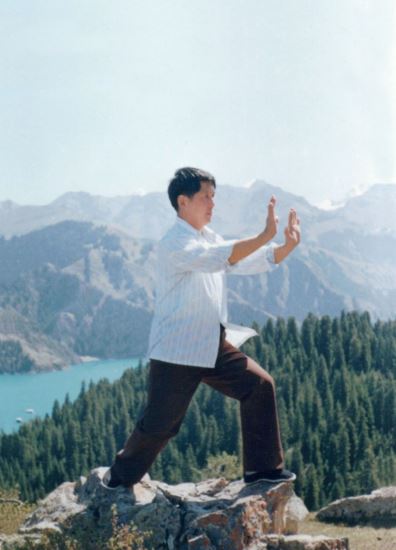
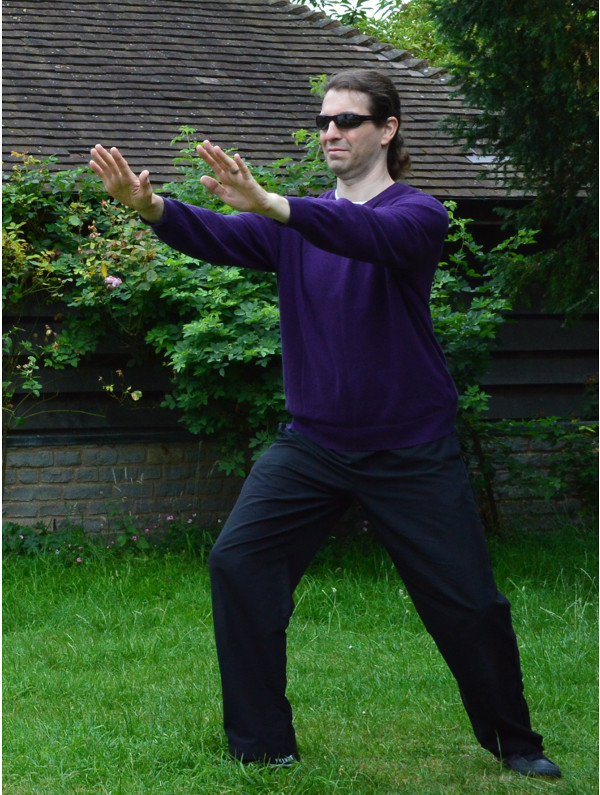
Taiji37 is an authentic taijiquan (tai chi chuan) style. It was developed from Nanpai Taijiquan, which originates from Siming Mountain in Zhejiang province, and its basis is a series of standing postures that are finely tuned for generating taiji forces. The Taiji37 form is shorter than the well-known Yang style form, and it provides an accessible means to learn and practice the Taiji37 postures. It was developed by Dr Shen Hongxun, who studied with a number of famous internal martial arts masters in Shanghai during the mid-20th century, including Yao Huanzi, Tian Zhaoling, and Xia Zixin.
Although the standing postures of Nanpai taijiquan were originally used for martial applications, they also have the function of improving health and wellbeing. Regularly practising the Taiji37 style form will gently develop your levels of physical fitness. Furthermore, the postures create expansion throughout the body, which improves body posture and flexibility, and releases bodily tensions and old emotions. At an energetic level, Taiji37 strengthens and expands the energy body, and furnishes the right conditions for awakening latent functions.
Dr Shen Hongxun grew-up in Shanghai and lived near to many famous internal martial arts masters. He first began studying taijiquan when he was around 10 years old. Dr Shen showed an aptitude for the practice and was soon introduced to his main teacher, Professor Yao Huanzi. Yao Huanzi's taijiquan knowledge came mainly from Yang family lineage, via Tian Zhaoling, however, he also studied and practised the 'Nanpai Taijiquan', which helped him develop strong taiji forces. This led Dr Shen to study Nanpai Taijiquan in depth with Master Xia Zixin.
In Nanpai Taijiquan, there is no set form, but rather a series of 37 precise and expansive standing postures. The aim of these postures is the development of taiji forces (taiji jin) that create explosive yet controlled martial movements. The Taiji37 style form was developed from these standing postures, as a means of making this knowledge more accessible to modern society.
Taijiwuxigong is an exercise system derived from taijiquan, traditional Chinese medicine, and traditional Chinese exercise systems (daoyins). The exercises are designed to release physical and mental tensions, developing better posture, improved mood, and increased energy.
Taijiwuxigong has the main function of improving health and wellbeing. The exercises achieve this by providing expansion throughout the body, improving body posture and flexibility, and releasing tension from both body and mind. At an energetic level, this activates and strengthens the energy body, paving the way to awakening of latent functions.
Taijiwuxigong was developed by Dr Shen Hongxun in the latter half of the 20th century as a means to provide the main benefits of taijiquan in a more accessible form. He did this by replacing the complex drill of the taijiquan form, with a set of standing, sitting, and lying exercises that adhere to taijiquan principles. The first of the Taijiwuxigong exercises was developed by Dr Shen Hongxun's main taijiquan teacher, Yao Huanzi. This provided a major part of the inspiration for Taijiwuxigong, which draws on knowledge from traditional Chinese and Tibetan practices.
Wuxi Meditation is based on an original method of Chan meditation, where the focus is to find the 'centre of the mind', the place where all thought originates. However, Wuxi Meditation also consists of essential exercises (internal movement, breath, and sound), to correct the body posture, cleanse the internal organs, and clear the channels and meridians. Wuxi Meditation can bring true stillness and inner peace, and thus facilitate spiritual development.
Stress and anxiety are known risk-factors for many chronic health issues that are prevalent in western society, and the natural response is to do some kind of 'relaxation'. Hence, meditation practices are gaining popularity as an antidote to our increasingly stressful lifestyles.
All meditation systems are rooted and developed from traditional practices that are thousands of years old. Many modern approaches focus on the 'mind exercise' element to achieve mental relaxation, disregarding any 'preliminary practices' as cultural and religious embellishments. Indeed, Dr Shen argued that it is important that traditional systems should continue to be developed over time, in order to improve and remain relevant to the socio-cultural demands of the present day.
However, Dr Shen also argued that development must come from a deep understanding of the aims of all elements of the traditional system. By disregarding many of the elements of traditional meditation systems, we are essentially 'throwing the baby out with the bathwater'.
Wuxi Meditation developed as a result of deep study of Daoist, Chan Buddhist, and Tibetan Buddhist meditation systems. It is areligious, having developed and evolved to meet the needs of modern society. At its core is a non-dualistic model of the human mind and body, that retains the traditional Eastern view, with its 'energy' channels/meridians and so forth, but as a modification and extension to the Western model of the 'self'.
As such, Wuxi Meditation is not just about mind exercise, it is also about body exercise, which develops improved posture, physical, emotional, and mental self-awareness. Hence, daily practice results in a gradually deeper understanding of your self at all levels, and your relationship with the modern environment.
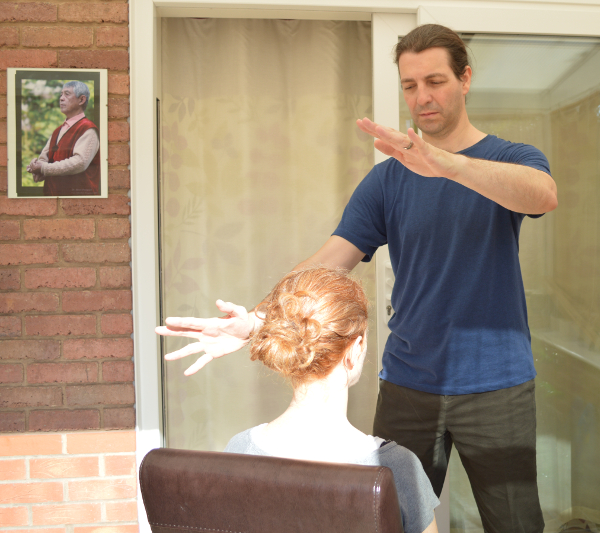
Buqi therapy is a non-touch energy healing system used for helping people with a wide variety of health problems. During a treatment, the therapist makes gentle use of the same internal energy forces as developed and used in Taijiquan, to release physical and mental tensions, and gradually correct body posture. The system draws on knowledge from Traditional Chinese Medicine, and hence is often considered to be a kind of 'acupuncture for the needle-shy'. In each Buqi treatment session, the therapist uses their own energy system to move Qi blockages in the meridians and channels of the client. The therapist also helps the client to continue the process themselves with a tailored programme of gentle exercises.
Buqi therapy, and the model of disease upon which it is based (the Buqi model), was developed by Dr Shen Hongxun of the Buqi Institute, after over 40 years of medical research in China. Dr Shen found that many diseases were linked to the overproduction and accumulation of pathogenic factors and toxic by-products, referred to as 'binqi' in the Buqi model - this overproduction and accumulation of binqi being linked to long-term poor body posture and physical/mental tension. The aim of a Buqi therapy treatment is to release the accumulated binqi and to minimise any further over-production of it.
As the approach to medical research adopted in China is somewhat different than in the West, we are not allowed to publish claims of Buqi's efficacy for treating any health issues. However, we can say that the results of Dr Shen's research showed benefits in people suffering with asthma, bronchitis, eczema, heart disease, hypertension, inflammation (joints/organs), long-term lower/upper back pain, mild depression, and the effects of stress. Marc has used Buqi to help clients with recurring migraine, eczema, hypertension, osteoporosis, depression, sexual dysfunction, and support through cancer treatments (eg chemotherapy). Although we cannot guarantee positive results, it is worth considering Buqi Therapy to complement conventional treatments of these and other conditions.
In a healthy person, binqi naturally leaves the organs via the meridians, and then leaves the body via the hands, the feet, and urine. Binqi is overproduced when the person has experienced a lot of negative emotions and/or severe stress. It is also overproduced when the spaces between the vertebra of the spine begin to narrow due to poor body posture. Poor body posture in itself can be induced by negative emotions and stress, but it is mainly linked with lifestyle and habit. Poor body posture causes binqi to accumulate in the intervertabral spaces, joints, muscles, and organs.
Buqi therapy consists of energy treatments and gentle exercises. Firstly, the therapist uses his/her own taiji forces to move accumulated binqi out of the client's body. This essentially kick-starts the healing process.
Secondly, the therapist helps the client to continue the healing process on their own, by prescribing a tailored programme of gentle exercises. The exercises continue the release of accumulated binqi, and gradually reduce its over-production. Over time, the prescribed exercises become stronger, building the client's strength, energy levels, and inner calm.
Marc has been offering private Buqi Therapy programmes for over 15 years, as well as providing short treatments during exercise classes. Click the button below for details on how to book a Buqi Therapy Programme with Marc.
We do hope the information presented here has captured your interest in the various elements of The Buqi System. If you would like to learn more, the best approach is to attend classes with a suitably qualified teacher - see above! Should you feel inspired to dig deeper into the traditions from which it was developed, the following books and articles may be of interest.